
“Tunnel boring machine for the Polihali transfer tunnels“
The high-altitude landscape of Malingoaneng became the backdrop for a historic leap in Southern African infrastructure. The official launch and naming of the second Tunnel Boring Machine (TBM) for the Polihali Transfer Tunnel marks the definitive transition from preparation to full-scale underground excavation for Phase II of the Lesotho Highlands Water Project (LHWP).


In a region increasingly defined by water scarcity and rapid urbanization, this milestone is a strategic intervention for South Africa’s economic heartland. As the TBM advances, it brings the vision of a water-secure Gauteng—which supports 60% of South Africa’s economy—closer to reality, while simultaneously strengthening the regional resilience and energy independence of the Kingdom of Lesotho.


1. Technical Mastery: Engineering Under PressureThe Polihali TBM is not merely a machine; it is a 423-metre-long subterranean factory. Specifically designed by the U.S.-based Robbins Company and manufactured by CCCC Tianhe in China, this double-shielded TBM was custom-engineered to conquer the formidable basalt rock of the Maluti Mountains.Technical Specifications at a Glance:Length: 423 metres (including 31 backup gantries).Cutterhead Diameter: 5.38 metres.Overburden: Capable of operating under rock cover exceeding 1,000 metres.Methodology: Concurrent excavation and installation of precast concrete lining segments, ensuring the “raw rock” is transformed into a finished structure in one continuous movement.

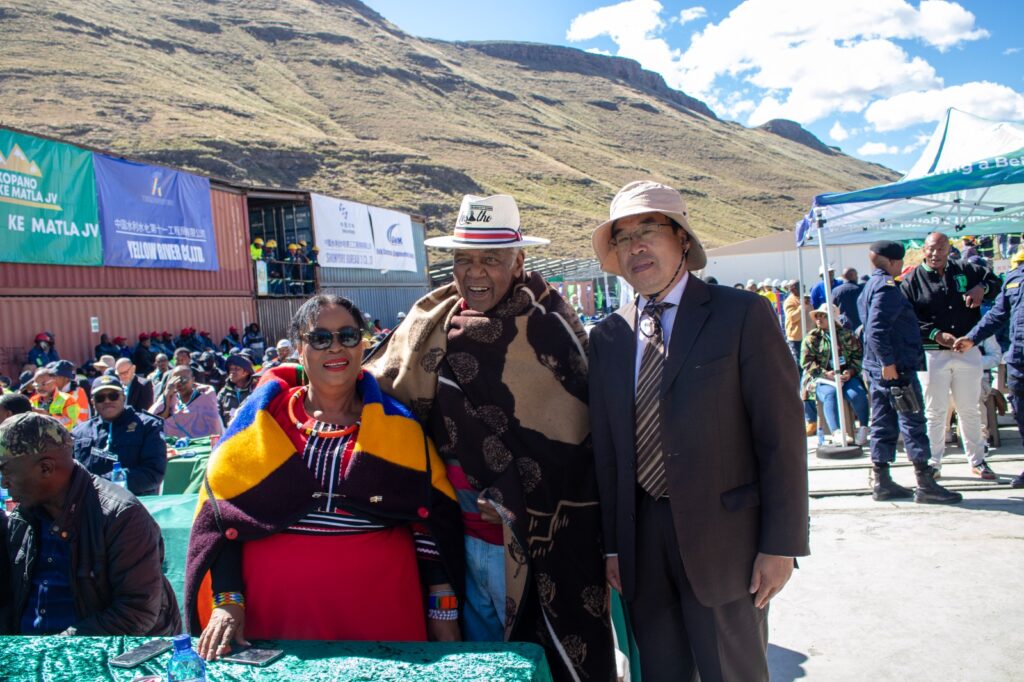
The Kopano Ke Matla (KKM) JV—comprising Yellow River Company, Sinohydro Bureau 3, and Unik Civil Engineering—has demonstrated extraordinary technical expertise in the configuration and assembly of this titan. Assembling a machine of this magnitude at an altitude of nearly 3,000 metres is a logistical feat that underscores the world-class engineering capability present on-site.
2. A Step-Change in Project ProficiencyThe arrival and launch of the Polihali TBM (now operating from the Polihali end) to join its counterpart launched at Katse in early 2025 creates a “pincer movement” that drastically improves the project’s proficiency.By boring from both ends of the 38.5km alignment simultaneously, the KKM JV is significantly accelerating the timeline toward the 2028/29 commissioning date. With the Katse TBM already having cleared over 1,000 metres and the Polihali unit having advanced its first 380 metres, the project is now in a “full-throttle” phase. This dual-TBM strategy is the linchpin in ensuring the LHWP Phase II meets its deadlines, ultimately increasing water transfer to South Africa from 780 to 1,270 million cubic metres per annum.
3. The Power of CollaborationThe success of this launch is a testament to the seamless collaboration between the Lesotho Highlands Development Authority (LHDA), the governments of Lesotho and South Africa, and a suite of international and local consultants.Key to the TBM’s deployment was the Metsi a Senqu Khubelu Consultants (MSKC) joint venture (including Zutari, SMEC, Knight Piésold, Hatch, and FM Associates), who provided the rigorous technical specifications and construction supervision. This cross-border synergy ensures that the R9.2 billion tunnel project adheres to the highest standards of integrity, safety, and precision.Minister of Water and Sanitation, Pemmy Majodina, emphasized that this project is “infrastructure at its most transformative,” serving as a model for regional cooperation that addresses both water and energy security (with a projected 30% increase in hydropower generation at ‘Muela).
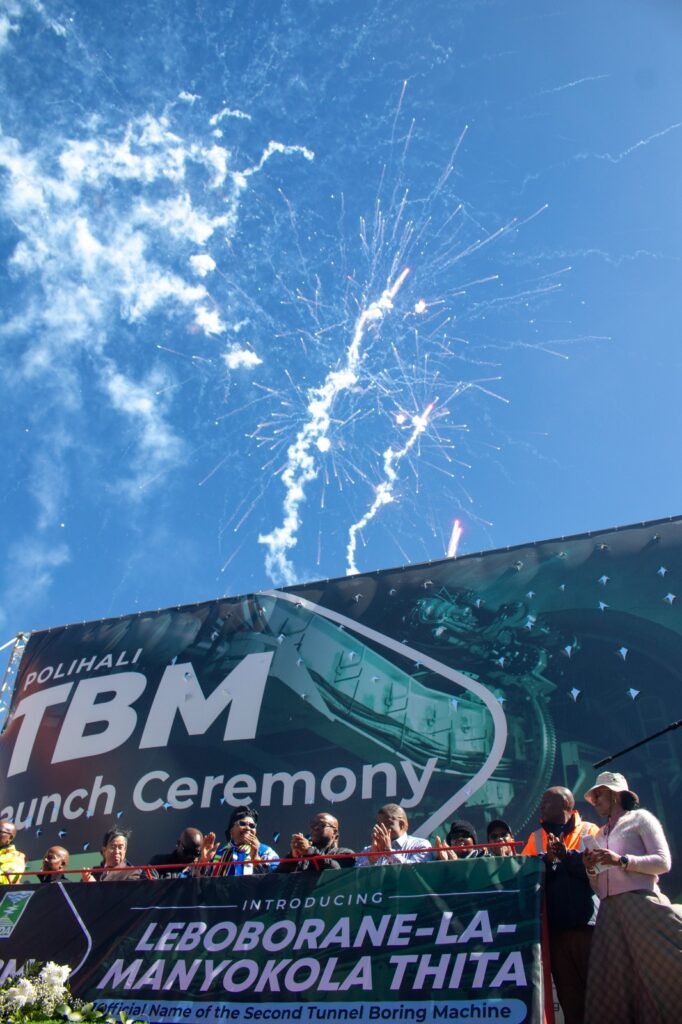
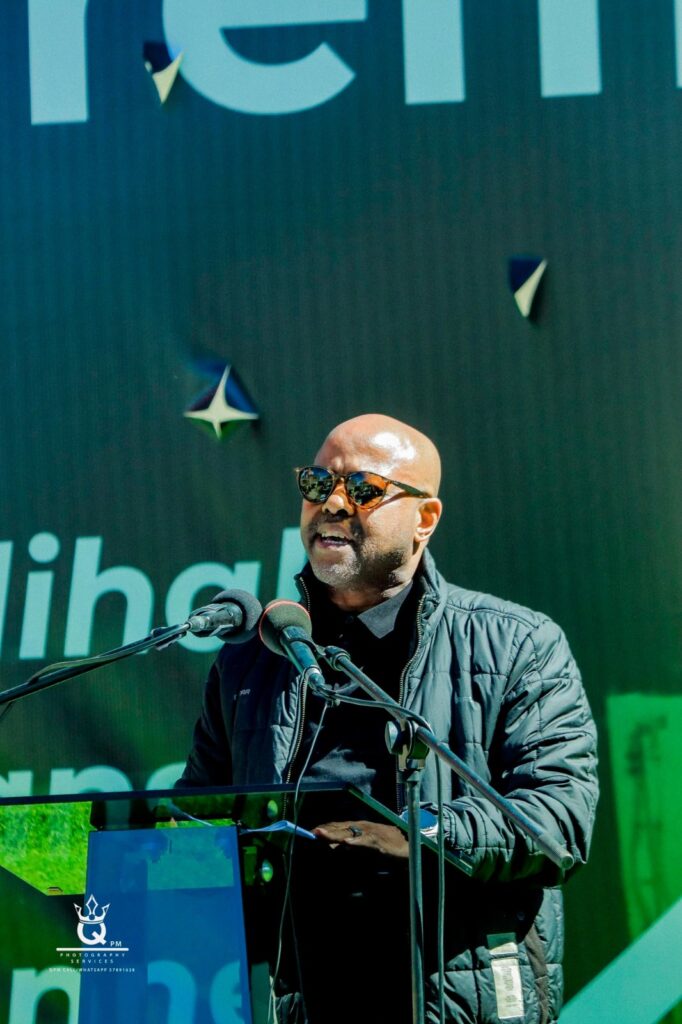
4. ‘Leboborane la Monyokola Thita’: A Name for the Ages In a move to foster national pride and ownership, the TBM was officially named through a nationwide competition. Minister of Natural Resources, Mr. Mohlomi Moleko, announced the winning name: “Leboborane la Monyokola Thita.”The name was proposed by Malira Chefa, a Grade 11 student from St. Paul High School in Botha-Bothe. Malira walked away with a first prize of M12,500, while her school received a substantial M37,500 reward.
The naming ceremony, which coincided with the 40th anniversary of the LHDA, highlights the project’s commitment to the “People” pillar—integrating the youth of Lesotho into a legacy of engineering excellence.Looking Ahead As the cutterhead of Leboborane la Monyokola Thita begins its long journey through the basalt, the focus shifts toward the next great technical challenge: the “lake tap.” This will involve a controlled underwater breakthrough into the Katse reservoir, requiring surgical precision.For now, the launch stands as a signal of momentum. In the words of Minister Majodina: “We are moving forward. We are building. We are delivering for the people.”speaking with S.A BUZZ
follow more on @ S.A BUZZ for more news..